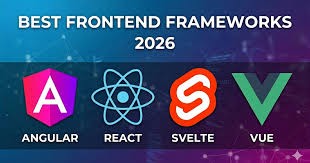
Frontend development in 2026 is evolving faster than ever. Modern web applications now demand lightning-fast performance, seamless user experiences, scalability, and AI-powered interactivity. Because of this, frontend frameworks have become more powerful, optimized, and developer-friendly.
Choosing the right frontend framework is one of the most important decisions for developers, startups, and businesses building modern applications. The right framework can improve development speed, performance, SEO, scalability, and user engagement.
So, which frontend frameworks are dominating the industry in 2026?
Let’s explore the best frontend frameworks developers should learn and use this year.
1. React.js — Still the Industry Leader
React continues to dominate frontend development in 2026 and remains the most widely used library for building modern user interfaces.
Created by Meta, React is trusted by startups, SaaS companies, and enterprise businesses because of its flexibility, performance, and huge ecosystem.
Why React Is Still Popular
- Component-based architecture
- Massive community support
- Strong job market demand
- Reusable UI components
- Excellent performance optimization
- Huge ecosystem of libraries and tools
React is especially popular for:
- SaaS applications
- dashboards
- social platforms
- AI tools
- startup products
Best For
- Full stack developers
- startups
- scalable web apps
- dynamic UI applications
2. Next.js — The Modern Full Stack Frontend Framework
Next.js has become one of the most powerful frameworks in 2026 because it combines frontend and backend capabilities into a single ecosystem.
Built on top of React, Next.js offers:
- server-side rendering
- static site generation
- API routes
- SEO optimization
- improved performance
Why Developers Love Next.js
- Better SEO compared to traditional React apps
- Faster loading speeds
- Excellent developer experience
- Built-in routing system
- Optimized for production applications
Many modern startups now prefer Next.js for:
- AI SaaS products
- business websites
- eCommerce applications
- portfolio platforms
Best For
- SEO-focused applications
- startups
- modern SaaS platforms
- production-grade web apps
3. Vue.js — Simplicity & Performance Combined
Vue.js continues to grow because of its simplicity and smooth learning curve.
Vue is known for:
- clean syntax
- lightweight architecture
- fast performance
- easy integration
Developers who find React overwhelming often prefer Vue because it is easier to learn while still being highly powerful.
Why Vue.js Is Trending
- Beginner-friendly
- Excellent documentation
- Fast development speed
- Flexible architecture
- Strong community support
Best For
- small to medium applications
- fast MVP development
- beginner developers
4. Angular — Enterprise-Level Frontend Development
Angular remains a strong choice for large enterprise applications.
Developed by Google, Angular provides a complete frontend framework with:
- dependency injection
- TypeScript integration
- structured architecture
- advanced tooling
Why Enterprises Use Angular
- Highly scalable
- Strong architecture
- Better maintainability
- Built-in features
- Excellent for large teams
Best For
- enterprise applications
- banking systems
- large-scale platforms
- corporate software
5. Svelte — The Rising Performance-Focused Framework
Svelte is becoming increasingly popular in 2026 because of its unique compiler-based approach.
Unlike traditional frameworks, Svelte compiles code during build time, resulting in:
- smaller bundle sizes
- faster applications
- less runtime overhead
Why Developers Are Excited About Svelte
- Extremely fast performance
- Minimal boilerplate
- Clean syntax
- Better optimization
Best For
- lightweight applications
- performance-focused apps
- modern UI experiments
6. SolidJS — The Emerging Developer Favorite
SolidJS is gaining attention for offering React-like development with significantly better performance.
It provides:
- fine-grained reactivity
- minimal re-renders
- extremely fast UI updates
Many developers see SolidJS as one of the most promising frontend technologies for the future.
What’s Trending Most in 2026?
The biggest frontend trends in 2026 include:
- AI-powered interfaces
- server-side rendering
- edge rendering
- ultra-fast performance optimization
- component-driven UI architecture
- mobile-first web experiences
Developers are now focusing more on:
- performance
- SEO
- scalability
- user experience
- developer productivity
Which Frontend Framework Should You Learn?
Learn React.js If:
- You want maximum job opportunities
- You want strong community support
- You plan to become a full stack developer
Learn Next.js If:
- You want to build modern SaaS products
- You care about SEO and performance
- You want production-ready architecture
Learn Vue.js If:
- You want an easier learning curve
- You prefer simpler syntax
- You build smaller applications
Learn Angular If:
- You target enterprise companies
- You work on large applications
Learn Svelte or SolidJS If:
- You love experimenting with new technologies
- You focus heavily on performance optimization
Final Thoughts
Frontend development in 2026 is more exciting than ever. While React and Next.js continue to dominate the industry, newer frameworks like Svelte and SolidJS are pushing the boundaries of performance and developer experience.
The best frontend framework ultimately depends on your goals, project requirements, and learning preferences. But one thing is clear developers who master modern frontend technologies will continue to be in high demand across startups, SaaS companies, and enterprise businesses.
Because in today’s digital world, frontend development is no longer just about building interfaces it’s about creating fast, intelligent, and immersive user experiences