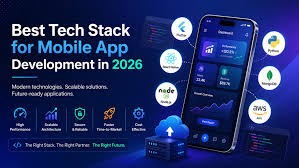
Choosing the right tech stack is one of the most important decisions when building a mobile application. The technologies you choose directly affect your app’s performance, scalability, security, development speed, and future maintenance.
Whether you are building a startup MVP, an e-commerce platform, a booking app, or a social media application, selecting the right technology stack can save both time and money.
In this blog, we will explore the best tech stacks for mobile app development in 2026 and understand which technologies work best for different types of applications.
A tech stack is a combination of programming languages, frameworks, databases, tools, and technologies used to build and run an application.
A mobile app tech stack usually includes:
- Frontend technologies (User Interface)
- Backend technologies (Server-side logic)
- Database
- APIs
- Cloud services
- DevOps & deployment tools
The right combination helps developers create fast, secure, and scalable applications.
A good tech stack helps businesses:
- Reduce development time
- Improve app performance
- Scale easily in the future
- Lower maintenance costs
- Enhance security
- Deliver better user experience
- Support multiple platforms efficiently
Choosing the wrong stack can create performance issues and increase long-term costs.
Before choosing a tech stack, businesses should understand the two major approaches to app development.
Native App Development
Native apps are built specifically for one platform:
- Android apps → Kotlin or Java
- iOS apps → Swift
Advantages:
- Better performance
- Smooth animations
- High security
- Full device feature access
Best For:
- Gaming apps
- Banking apps
- High-performance applications
Backend technologies manage:
- User authentication
- Databases
- APIs
- Payments
- Notifications
- Cloud storage
1. Node.js
Node.js is one of the most widely used backend technologies.
Why Developers Love It:
- Fast performance
- Scalable architecture
- Large ecosystem
- Ideal for real-time applications
Best For:
- Chat applications
- Real-time tracking apps
- Scalable platforms
2. Firebase
Firebase provides ready-made backend services.
Features:
- Authentication
- Real-time database
- Push notifications
- Cloud storage
Best For:
- Startup MVPs
- Small applications
- Fast product launches
3. Django
Django is known for security and rapid development.
Best For:
- AI-powered apps
- Data-driven platforms
- Secure applications
MongoDB
MongoDB is popular for scalable applications.
Best For:
- Flexible data structures
- Real-time applications
PostgreSQL
PostgreSQL is highly reliable and secure.
Best For:
- Financial systems
- Enterprise apps
MySQL
MySQL remains a strong choice for traditional applications.
Best For:
- Business applications
- Content platforms
Cloud services help apps scale efficiently.
Popular Cloud Platforms:
- Amazon Web Services
- Google Cloud
- Microsoft Azure
Benefits:
- Better scalability
- Faster deployment
- Cloud storage
- Improved security
The best tech stack depends entirely on your business goals, budget, scalability needs, and app requirements.
For most startups and modern businesses:
- Flutter + Node.js + Firebase is currently one of the strongest combinations for fast and scalable app development.
For enterprise-level or performance-heavy apps:
- Native technologies like Swift and Kotlin remain excellent choices.
Choosing the right tech stack early can save significant time, reduce costs, and improve your app’s success in the long run.